
An atlas of inner traditions
Many traditions.
Distinct maps.
One careful inquiry.
Explore how contemplative traditions understand body, breath, mind and consciousness. Follow the sources. Discover the connections. Honour the differences.
Rooted in texts. Open to inquiry. Thoughtful by design.
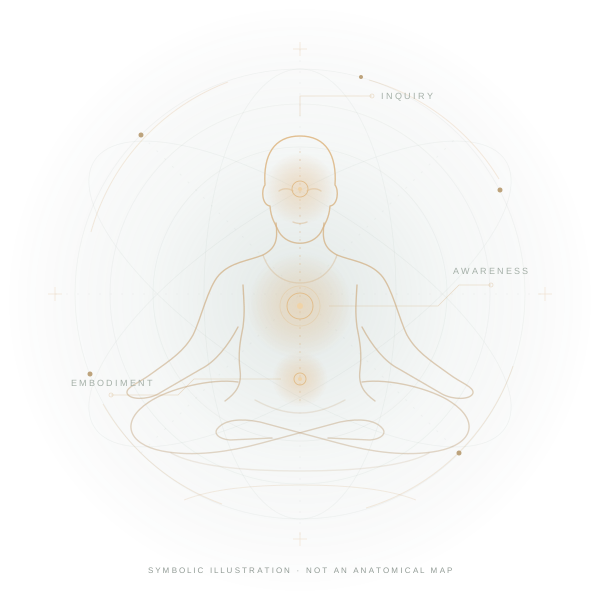
Distinct lineages. Living questions.
Four traditions. Distinct perspectives.
Tamil Siddha, Qigong, Kriya Yoga and Tibetan Mahayana. Begin with a tradition and let its own language guide you.
Tamil Siddha
Explore the language of breath, embodiment and Śiva in the Tirumantiram and the diverse Tamil Siddha traditions.
Qigong
Explore Chinese practices that bring posture, movement, breathing and attention together, while distinguishing their different aims.
Kriya Yoga
Meet the Lahiri Mahasaya stream through public teachings on meditation, prāṇa and inward awareness, with initiation details kept private.
Tibetan Mahayana
Explore the Mahāyāna foundations of Tibetan Buddhism: the aspiration to awaken for all beings, compassion and insight into emptiness.
The threads of inquiry
Four questions.
Many ways of seeing.
What is the body? What animates it? What is mind? And who is aware?
Explore these questions across traditions, without turning their answers into a single universal map.
Body & embodiment
What does a tradition’s map describe: a physical body, a ritual landscape, or a way of attending to experience?
A moment with the source · Tamil
அருட்பெருஞ்ஜோதி அருட்பெருஞ்ஜோதி
தனிப்பெருங்கருணை அருட்பெருஞ்ஜோதிVast light of grace. Incomparable compassion.
Vallalar · Traditional invocation · Interpretive excerpt
Care is part of the practice
Clarity before certainty.
A traditional teaching, an interpretation and a scientific finding are different kinds of knowledge. We make those differences visible, so you can read with confidence and curiosity.
Our editorial methodCuriosity is a good place to begin.
No prior knowledge. No need to choose a single path.